
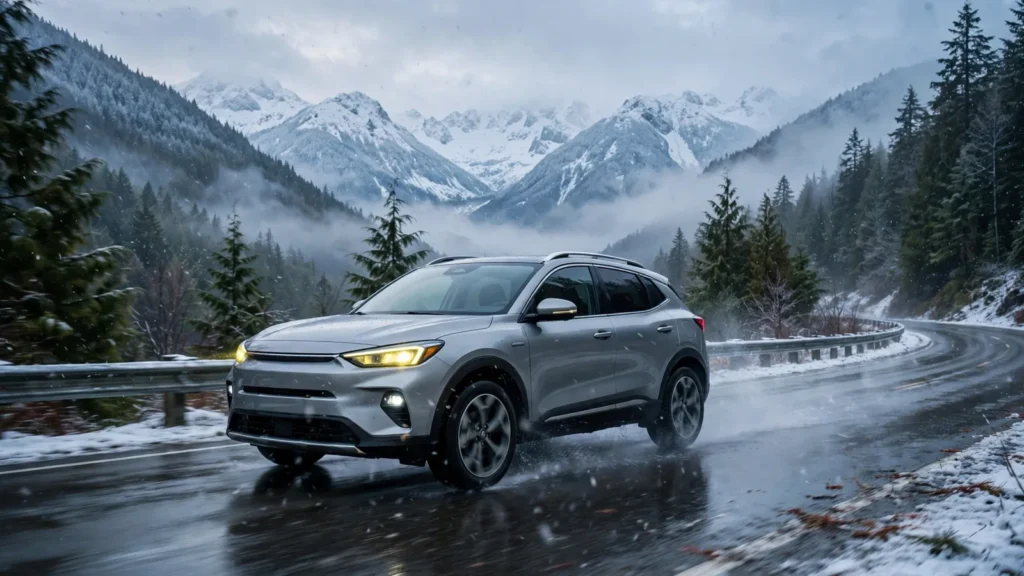
Winter in the Lower Mainland rarely looks like a postcard — most days it is rain, wet leaves and black ice on the morning commute. But the moment you leave Langley for the Sea-to-Sky, the Coquihalla, or a family trip to the Interior, conditions change fast. That is exactly why used AWD SUVs in BC are in such high demand every fall: all-wheel drive gives you traction to get moving on slippery roads, and an SUV gives you the ground clearance and space most families actually need.
This guide covers what all-wheel drive really does (and does not do), the BC winter tire rules that apply to every vehicle — AWD included — the used AWD SUV models worth shortlisting, and the checks that separate a winter-ready vehicle from an expensive surprise.
Why AWD helps in winter — and where it stops helping
All-wheel drive sends power to all four wheels, so when one wheel starts to slip on snow, slush or a wet hill, the others can still pull you forward. For getting started at an icy intersection, climbing a snowy driveway in Abbotsford, or holding traction on a slushy Highway 1 on-ramp, AWD is a real advantage over front-wheel drive.
What AWD does not do is help you stop or steer better on ice. Braking and cornering grip come from your tires, not your drivetrain. An AWD SUV on worn all-season tires will take longer to stop than a front-wheel-drive car on proper winter tires. The honest formula for BC winter confidence is: AWD + winter-rated tires + a vehicle in sound mechanical condition. Skip any one of the three and you are relying on luck.
BC winter tire requirements: what the law actually says
British Columbia requires winter tires or chains on most designated highways from October 1 to April 30 — and on some routes not passing through mountain passes or high-snowfall areas, the requirement ends March 31. The routes are marked with regulatory signs, and the rule applies to AWD and 4WD vehicles exactly the same as to any other passenger vehicle.
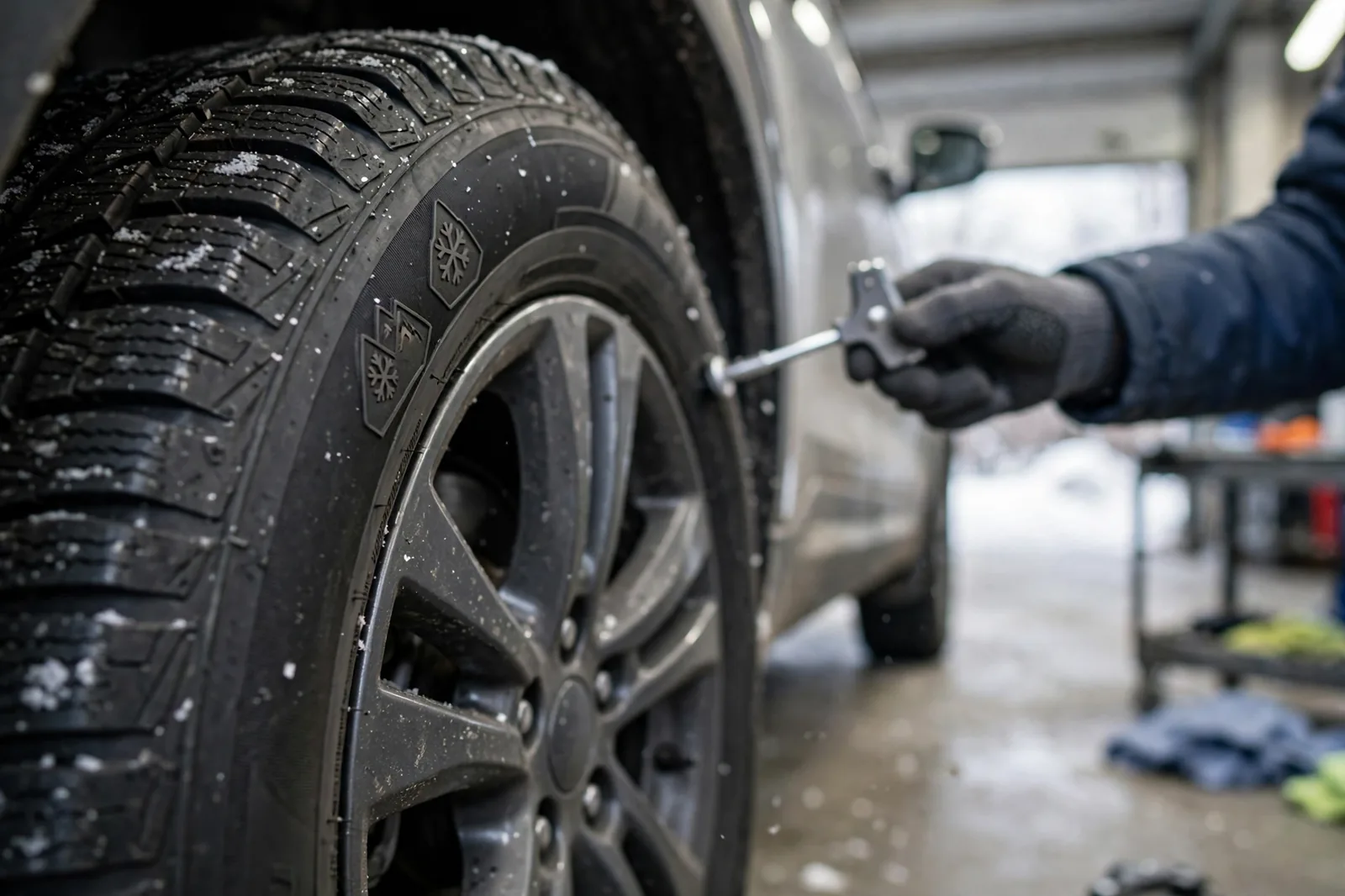
- A legal winter tire in BC carries either the M+S (mud and snow) marking — the legal minimum — or the three-peaked mountain and snowflake symbol, which the Province recommends for genuine cold-weather traction.
- Tires must have at least 3.5 mm of tread depth to count.
- Designated routes include the highways most Lower Mainland drivers use for winter trips, such as the Sea-to-Sky to Whistler and the Coquihalla.
When you are buying a used SUV in November, check the tires it sits on today: what symbol is on the sidewall, and how much tread is left? If the tires are near the limit, budget for a replacement set as part of the real cost of the vehicle. The Province publishes the full route maps on its Designated Winter Tire and Chain Routes page.
The used AWD SUVs worth shortlisting in BC
These are the models BC buyers ask us about most — each one is a proven winter vehicle when it has been maintained properly. Availability changes daily, so we have linked to live examples from our current inventory where we have them.
Honda CR-V (AWD)
The CR-V is the default family choice for a reason: sensible size, good fuel economy for an SUV, a roomy cabin, and a long record of dependable ownership in Canada. Honda’s available all-wheel drive suits it well for Fraser Valley commuting and weekend trips. See our current 2019 Honda CR-V Touring for an example of the top trim in our inventory.
Toyota RAV4 (AWD)
The RAV4 has been one of Canada’s favourite SUVs for decades, and used examples hold their value because owners trust them. Available AWD, straightforward maintenance, and plentiful parts across BC make an older RAV4 a smart budget winter buy — like this 2010 Toyota RAV4 currently in our inventory.
Mazda CX-5 (AWD)
If you actually enjoy driving, the CX-5 is the one to test. Mazda’s i-ACTIV AWD system is designed to respond before wheels slip, the interior feels a step above most rivals, and it remains efficient on a Highway 1 commute. Our 2021 Mazda CX-5 AWD shows what a newer, low-kilometre example looks like.
Volkswagen Tiguan (4Motion)
The Tiguan’s 4Motion all-wheel drive and solid, European highway feel make it a confident winter cruiser, and used prices are often gentler than the Japanese rivals. A well-maintained example — such as this 2014 Volkswagen Tiguan 4Motion — can be excellent value.
Ford Explorer (4WD) — for bigger families
Need three rows and real towing ability for a boat or trailer heading to the lake next summer, plus winter traction now? The Explorer is the step-up choice. Our 2019 Ford Explorer XLT is the size class to look at if a compact SUV is simply too small.
Thinking electric? Tesla Model Y (Dual Motor AWD)
Dual-motor Teslas put power to both axles and are increasingly common on used lots in BC. They are a different ownership proposition — home charging matters — so read our used Tesla lineup guide before deciding.
What to check before you buy a used AWD SUV
- Confirm it is actually AWD. Many SUVs were sold in both front-wheel-drive and AWD versions of the same model and trim. Verify the drivetrain from the VIN and the vehicle itself — never assume.
- Test the AWD system. On a test drive, listen for binding, shuddering or warning lights in slow, tight turns — signs the AWD coupler or differential needs attention.
- Inspect the tires as a set. AWD systems prefer four matching tires of similar wear. Mismatched sizes or one brand-new tire beside three worn ones can strain the system.
- Check the service history. Look for regular oil changes and, where the manufacturer requires it, differential and transfer-case fluid service in the records and the vehicle history report.
- Look underneath. BC’s coastal winters are kinder than the Prairies, but check the underbody, brake lines and subframes for corrosion anyway — especially on a vehicle that spent its life outside the Lower Mainland.
- Read the title status carefully. If a vehicle carries rebuilt status, that is not an automatic reason to walk away — but the damage history must be fully disclosed and the price should reflect it. Our honest guide to rebuilt-title vehicles in BC explains what to verify.
- Get an independent inspection. A pre-purchase inspection by a mechanic you trust is the cheapest certainty in the whole process.
Budget for the whole winter picture
The purchase price is only part of owning a used SUV in BC. Factor in GST and PST on the purchase, the documentation fee, ICBC insurance and registration, and a winter tire budget if the vehicle needs them. If you are financing, our financing page explains how to get started, and it is always worth deciding your comfortable monthly payment before you fall in love with a specific vehicle. Taxes and documentation are additional on vehicle purchases.
The bottom line
The best used AWD SUV for a BC winter is not the newest or the most expensive one — it is the one with a verified AWD system, matching winter-rated tires with real tread left, a documented history, and a clean bill of health from an inspection. Get those four things right and Langley rain, Fraser Valley frost, and a snowy Coquihalla run all become a lot less stressful.
Looking for your next vehicle? Explore the latest used SUVs for sale in Langley, BC at WG Motors Ltd. Browse our available vehicles, arrange a test drive, or contact our team today. We’re in Langley at 19677 Willowbrook Dr., open Monday to Saturday, 11 AM to 6 PM. Drive With Confidence.