
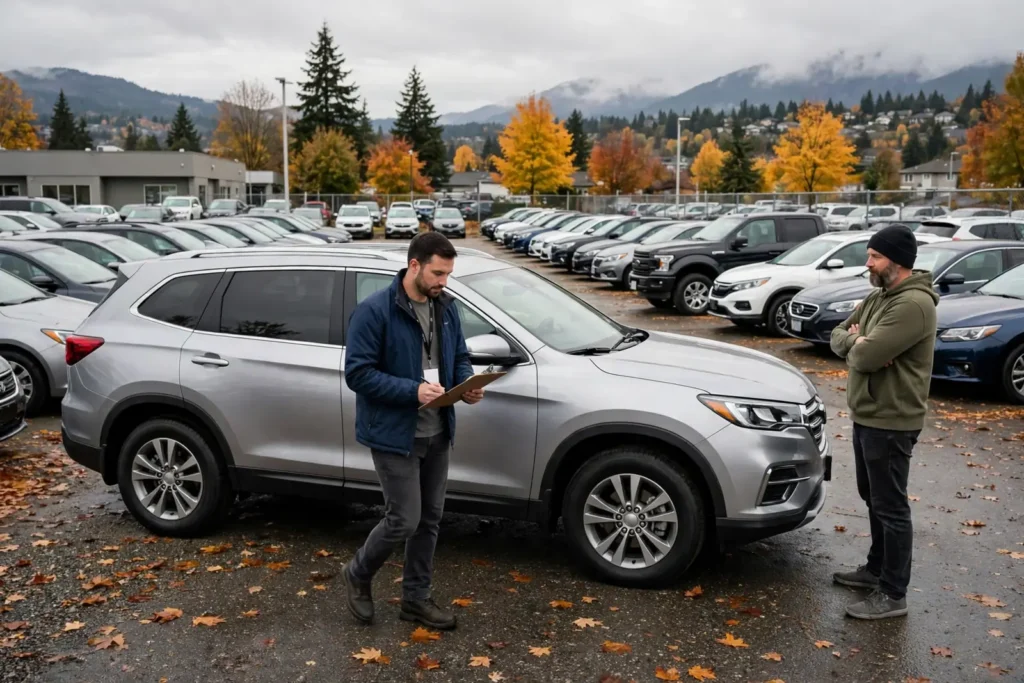
For many buyers, the easiest route into their next vehicle starts with the one in the driveway. When you trade in your car in Langley BC, one visit handles both sides of the change: the dealership appraises your current vehicle, applies its value against the one you are buying, and — under BC tax rules — you pay tax only on the difference. This guide explains how the appraisal works, what sets the car trade-in value in BC, how the tax saving is calculated, what happens if you still owe money, and how to prepare.
How a trade-in appraisal works, step by step
An appraisal is the dealership working out what your vehicle is worth to them, based on reconditioning cost and what it can realistically sell for:
- The basics. Year, make, model, trim, kilometres and VIN, plus options that matter — drivetrain, engine, and features buyers ask about.
- A walk-around and short drive. Body and paint condition, tires, brakes, glass, warning lights, and whether everything works, from the air conditioning to the power tailgate.
- A history and lien check. The vehicle’s accident and title history is reviewed, and a lien search confirms whether money is still owed against it.
- A market check. What similar vehicles are actually selling for in the Lower Mainland right now, and how long yours is likely to take to sell.
- A figure in writing, inside your deal. The trade-in value is written into the purchase agreement for your next vehicle — which is also what makes the BC tax reduction below possible.
Nothing about the process requires you to accept. An appraisal gives you a real, in-writing number to compare against your other options, including selling privately.
What actually sets your car trade-in value in BC
No two trade-ins price the same, but the same factors come up in every appraisal:
- Kilometres and age — lower kilometres for the year support a stronger figure, though condition matters more than the odometer alone.
- Mechanical condition and maintenance — a vehicle with service records showing regular oil changes and completed repairs appraises better than the same vehicle with no history at all.
- Accident and title history — damage history lowers value, and a rebuilt-title vehicle is valued with that status in mind. It can still be traded in; the history is simply reflected in the figure. Our guide to buying a rebuilt-title vehicle in BC explains how that status works.
- Tires and season — in November, a vehicle arriving on worn tires needs that cost priced in. A good set of winter tires included with the vehicle is a genuine plus in BC at this time of year.
- Local demand — AWD SUVs and work-ready trucks are what Lower Mainland buyers ask for heading into winter, and demand supports value.
- Completeness — both keys or fobs, the owner’s manual, and any accessories the vehicle came with (cargo covers, roof rails, a second set of wheels) all avoid deductions.
The BC tax advantage of trading in
This is the part many sellers undercount. Under the Province of BC’s Bulletin PST 308, when the seller accepts your vehicle as a trade-in as part of the purchase, the trade-in value reduces the taxable price of the vehicle you are buying. At a BC dealership, a passenger vehicle priced under $55,000 carries 7% PST plus 5% GST — 12% in total — and with a trade-in, that 12% applies to the price after your trade-in comes off. One nuance: the PST rate itself is set by the full price before the trade-in is deducted; the trade-in lowers the amount taxed, not the rate band.
A worked example using our standard $499 documentation fee:
- Vehicle you are buying: $25,000, plus the $499 documentation fee = $25,499
- Your trade-in: $8,000 → taxable amount $17,499
- Tax at 12%: $2,099.88 — instead of $3,059.88 without a trade-in
- Tax saved: $960, exactly 12% of your trade-in’s value
That saving only exists when the same dealership takes your vehicle as part of the same purchase. Sell your old car privately first and buy separately, and the full price is taxed. Keep this in mind when you compare a trade-in figure against a private-sale asking price — the private price has to beat the trade-in by more than the tax saving, plus your time, before it is genuinely ahead. Our used car financing guide for Langley walks through the rest of the cost picture.
Trading in a car with a loan owing
Trading in a car with a loan owing is routine. The amount still owing is paid out as part of the transaction so the dealership takes the vehicle with clear title, and the math is straightforward:
- Positive equity: your vehicle is worth more than you owe. The difference reduces what you pay — or what you finance — on the next vehicle.
- Negative equity: you owe more than the vehicle is worth. The shortfall has to be covered, either in cash or, subject to lender approval, carried into the next loan. Carrying it means paying interest on that amount, so ask for both numbers in writing before you decide.
Bring your lender’s name and, if you have it, a current payout statement — it speeds up the appraisal. And keep making your scheduled payments until the payout is confirmed complete.
Trade-in vs selling privately in BC: an honest comparison
Selling privately can sometimes return a higher headline price. It also makes you the salesperson: writing the ad, answering messages, hosting test drives with strangers, and meeting your buyer at an Autoplan broker to complete the transfer — ICBC requires a purchased vehicle to be registered to its new owner within 10 days, using a signed Transfer/Tax Form (APV9T) and the seller’s signed registration. On a private sale, your buyer also pays 12% PST at registration, which is part of why private buyers negotiate hard. Buy from a licensed dealer instead, and ICBC notes dealership staff can help with registration, insurance and licensing, through an on-site or nearby broker.
A trade-in trades a possibly higher private price for certainty and one appointment: one negotiation, the tax saving described above, no advertising, no strangers at your home, and no gap between selling one vehicle and driving the next. If you would rather sell your vehicle outright without buying another, our earlier guide on selling your car for cash in Langley covers that route.
How to prepare your trade-in
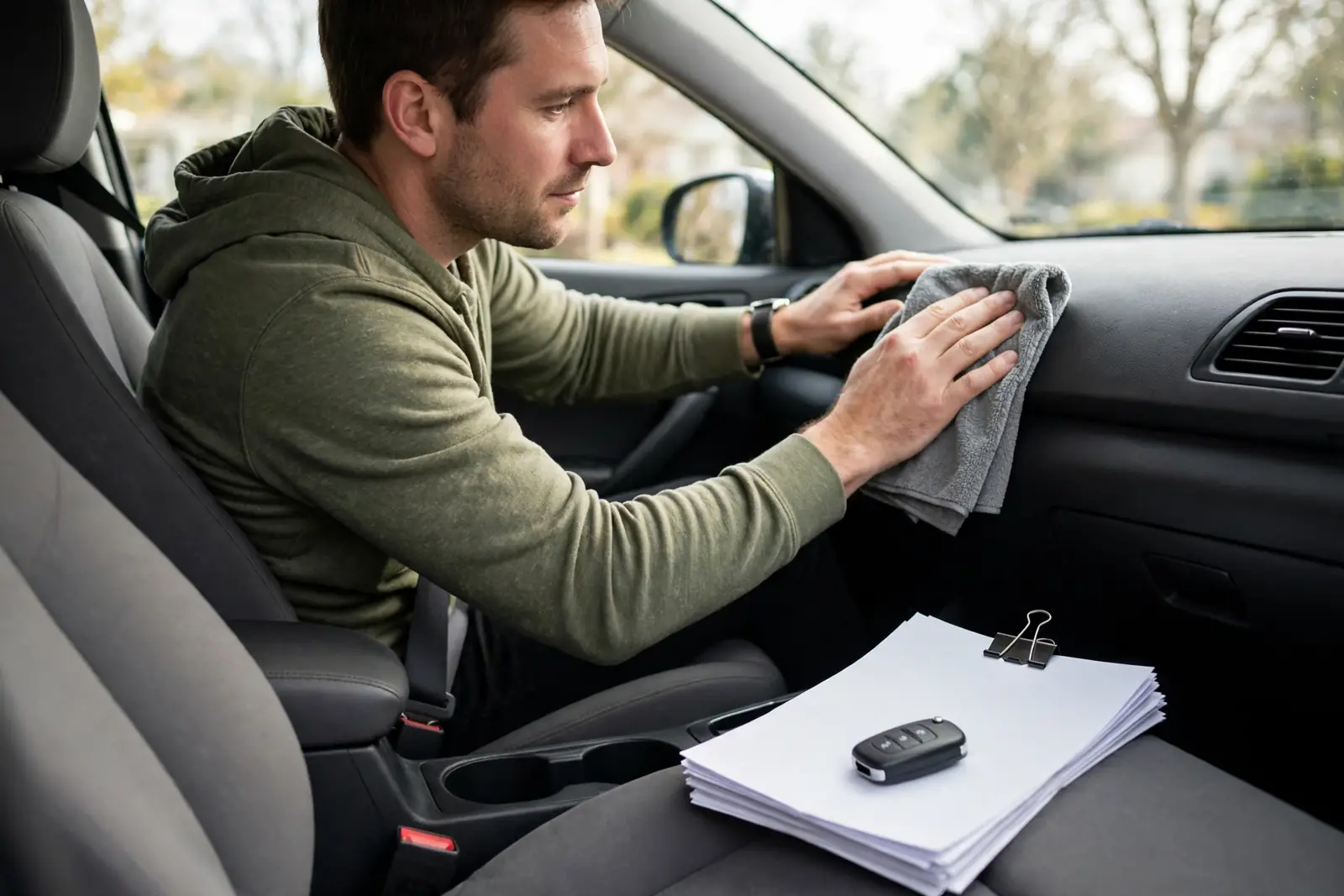
- Clean it, inside and out. A wash, vacuum and cleared-out trunk will not transform the value, but a cared-for presentation supports the appraiser’s read of the vehicle’s condition.
- Gather the records. Service receipts, inspection reports and repair invoices — bring them all.
- Bring everything the car came with: both keys or fobs, owner’s manual, and removable accessories.
- Fix the cheap, obvious items — a burnt-out bulb or worn wiper blades. Skip major repairs hoping to recover the cost; reconditioning is priced into the appraisal either way.
- Be upfront about known issues. The appraisal includes a drive and a history check — undisclosed problems surface anyway, and honesty keeps the process fast. The same checks in our used car inspection checklist for BC are a good self-audit before you come in.
What your trade-in could go toward right now
Verified on our Langley lot today, these give a sense of the range your trade-in could be applied against — see the full current used inventory in Langley for everything available:
- 2017 Dodge Journey SXT — $8,499, 123,000 km, clean title. A three-row, seven-seat SUV with a 3.6-litre V6 — an easy step up for a family trading out of a smaller vehicle.
- 2015 Honda Odyssey — $13,990, 200,200 km, clean title. Sliding doors and minivan practicality for growing families, and a natural trade target from an older SUV.
- 2021 Chevrolet Silverado 3500HD LT — $44,950, 104,200 km, rebuilt title. A 6.6-litre diesel crew cab for work or towing. We disclose its status plainly, as we do on every vehicle: rebuilt title, body damage only, repaired and passed inspection, as detailed on its listing.
More budget room? Our roundup of used cars under $15,000 in BC shows how far a trade-in plus a modest budget goes.
The bottom line
To trade in your car in Langley BC with confidence, know three numbers before you sign: the appraised value, any amount still owing, and the tax saving the trade-in creates on your next vehicle. Start on our sell or trade-in page, browse the inventory, and if you plan to finance the difference, our financing page explains the process — approval and rates rest with the lender, and WG Motors has no subprime or bankruptcy lender. Every vehicle we sell includes a 3-month warranty. WG Motors Ltd. is a licensed Langley dealer (Dealer #50238) at 19677 Willowbrook Dr., Langley, BC, open Monday to Saturday, 11 AM to 6 PM. Bring your vehicle by for an appraisal, or contact our team to book a time. Drive With Confidence.